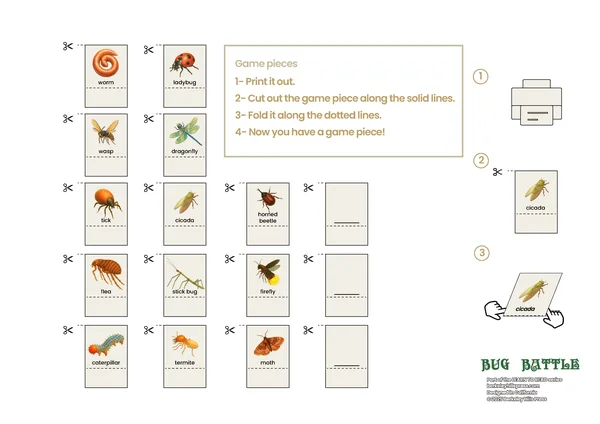
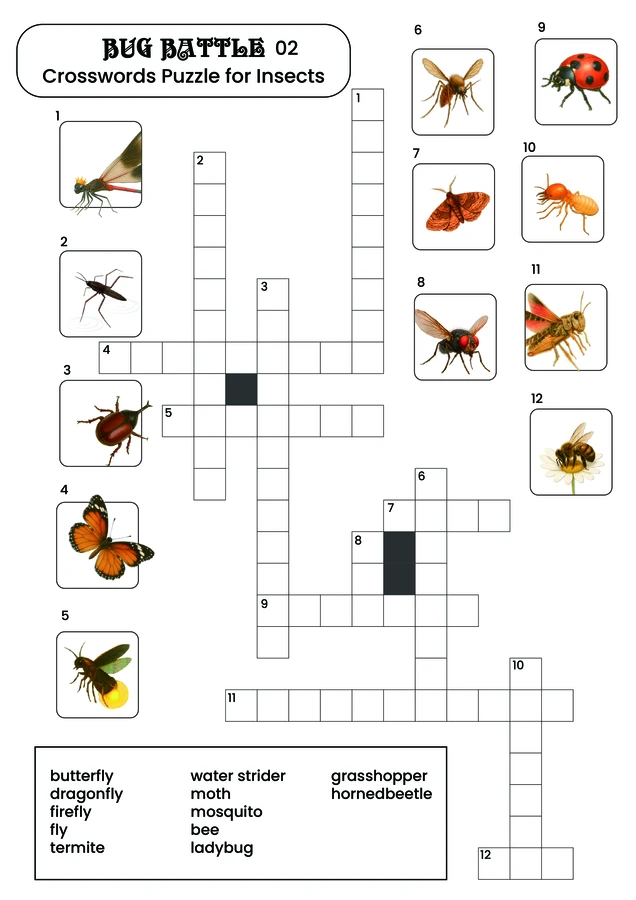
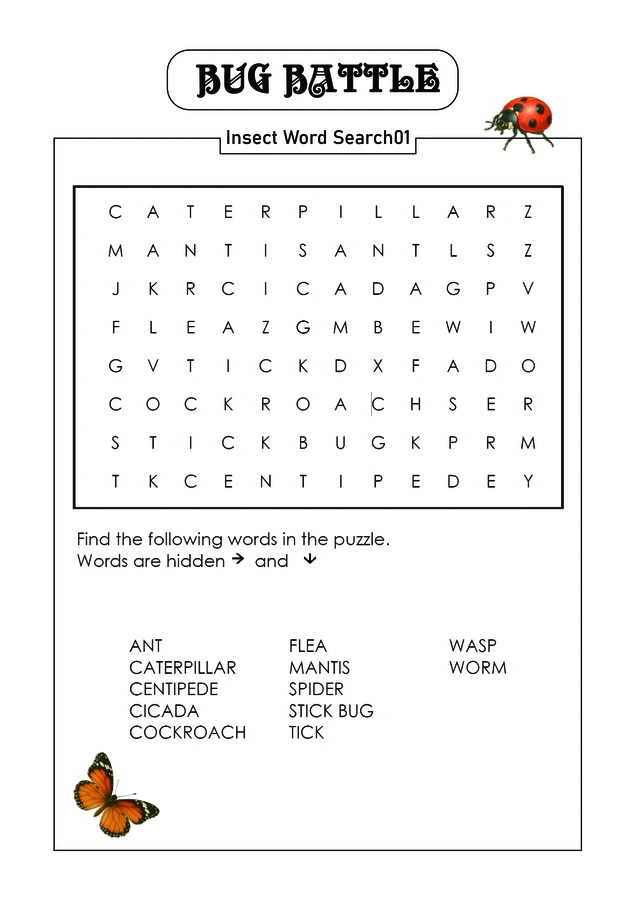
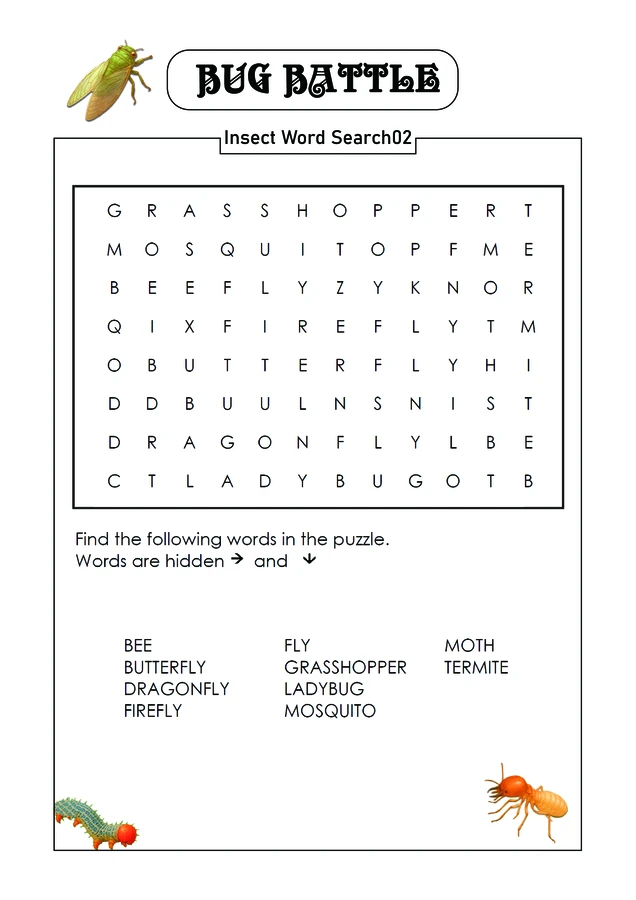
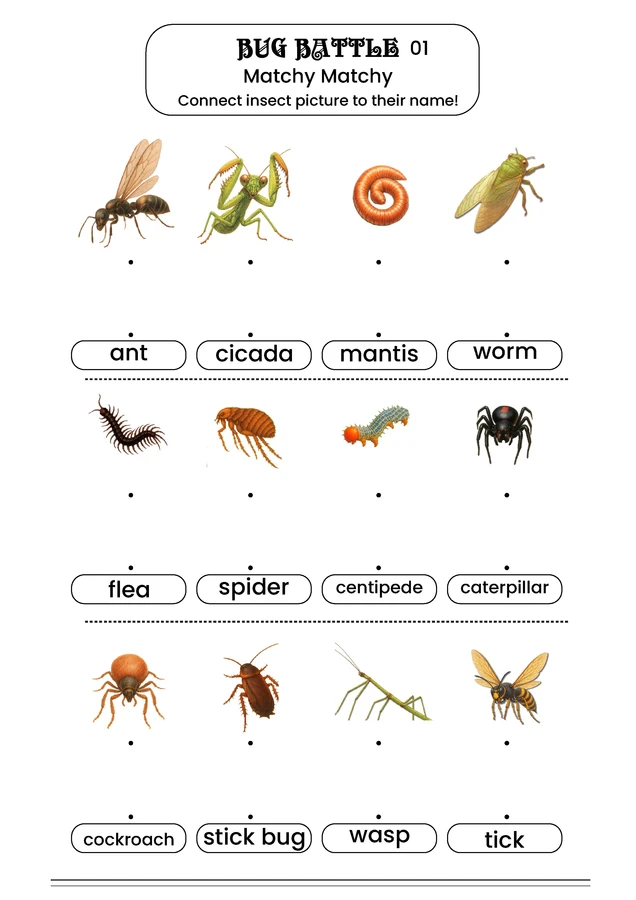
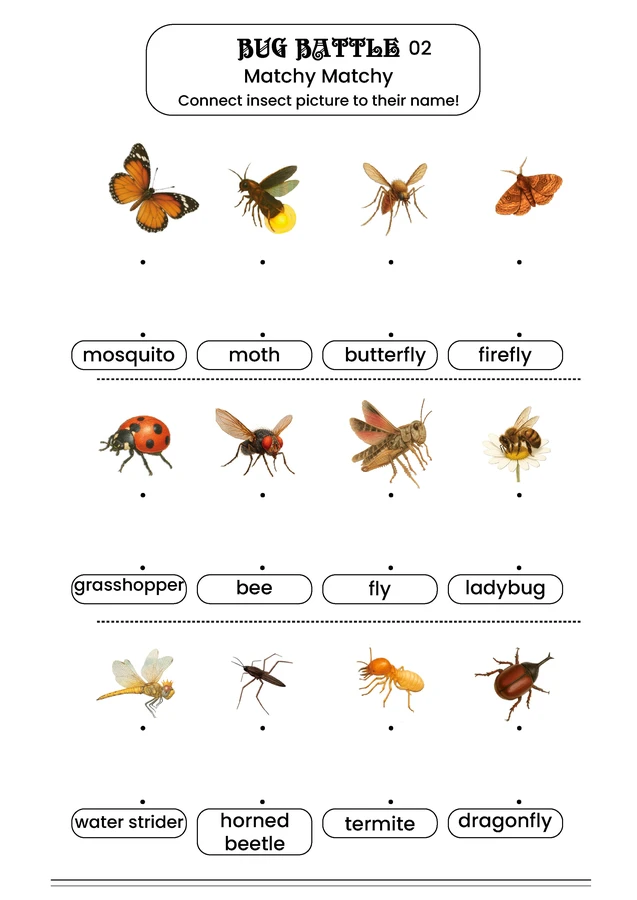
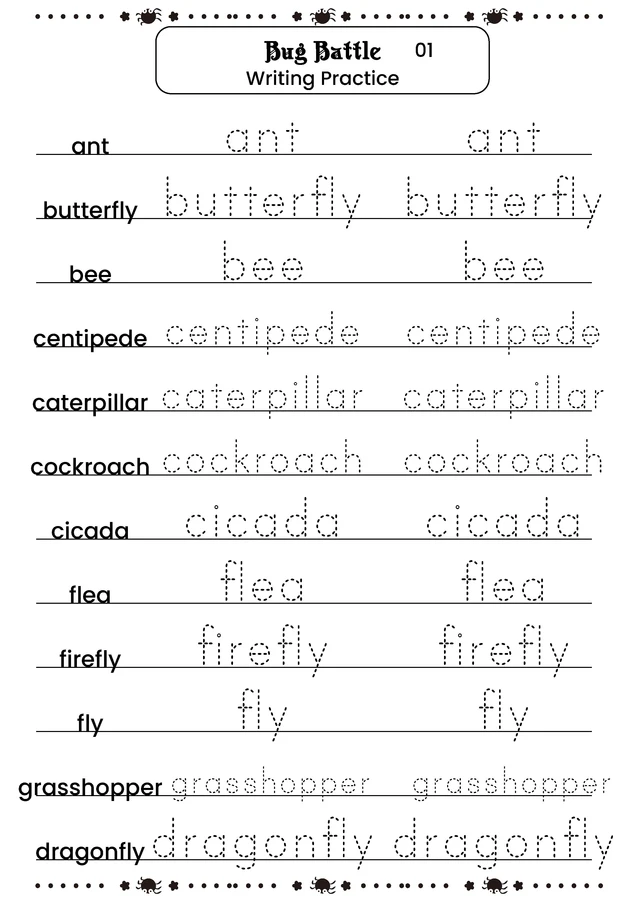
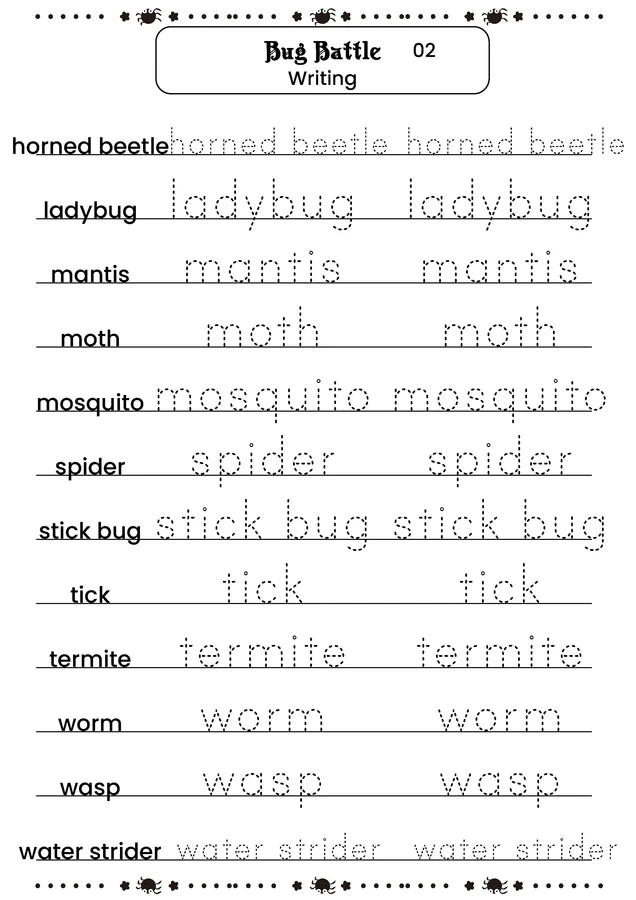
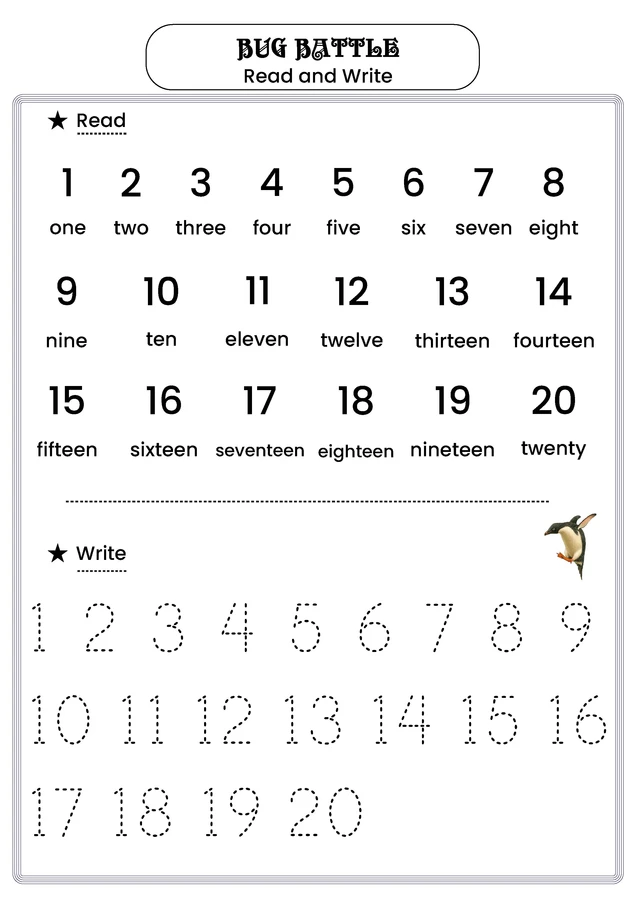
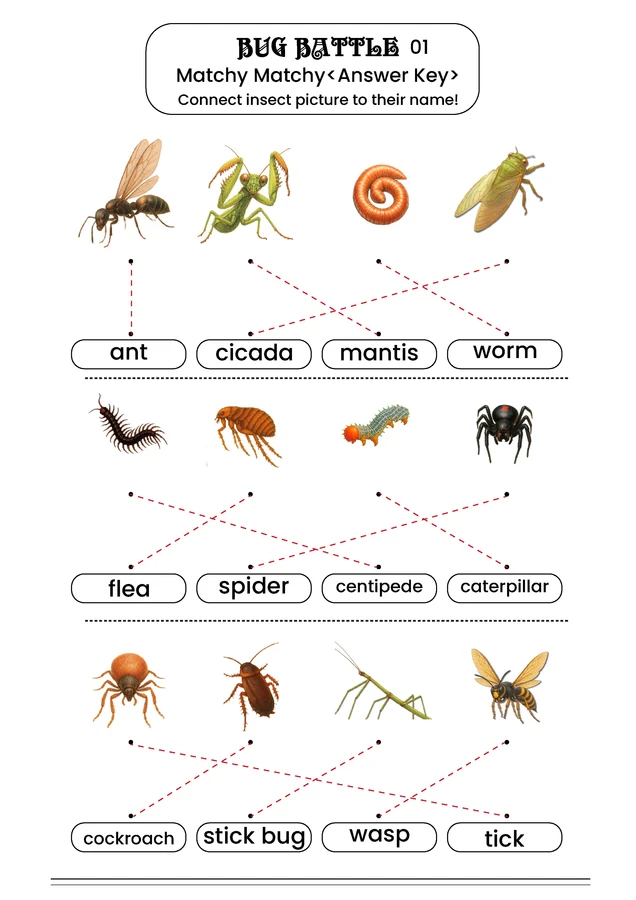
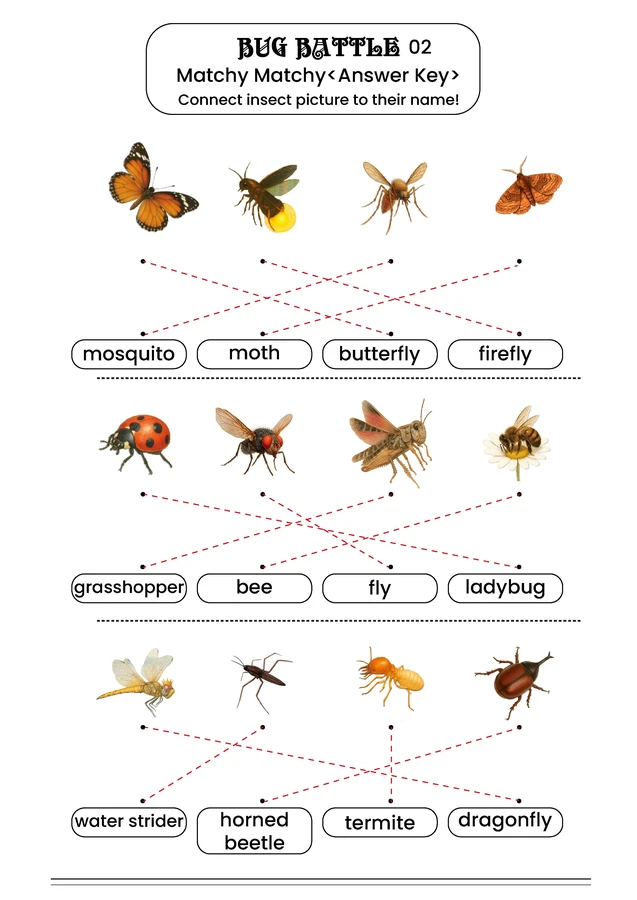
The rules are simple. The object is to get rid of your cards as quickly as possible; however, a player is only allowed to play three cards at a time—unless they also play one of the black or gold cards. Each player must describe each card they are playing: “blue butterfly,” “red ladybug,” “brown water strider,” etc. The object of the game is to get familiar with insect names, colors, and with simple math (division and multiplication).
To start a hand, five to seven cards are dealt out to each player, and the top card of the deck is flipped over and set aside to begin the discard pile. The player to the dealer’s left plays first. The regular order of play is clockwise. Every player must play a card matching the discard in color, number or insect species (exceptions: centipede, mantis, spider, wasp and dragonfly; see below).
A player may draw a single card from the deck before their turn to play, even if that player has a playable card. If they choose to draw a card and the drawn card is playable, they have the option of either keeping it or playing it immediately (as part of that turn).
Colors match colors (e.g., a blue card matches another blue card).
Insect species follow the same species (a bee matches a bee).
Insect names beginning with the same letter as the previous insect match them, too (a fly matches a flea, and vice versa).
Insect names ending in the same letter as the previous insect also follow them (a caterpillar matches a spider, and vice versa).
Any card is matched by a card with the same number (a 7 is matched by another 7).
Any card is matched by a card with the following number (a 7 is matched by an 8).
Any card can be matched by a card with a number 2 or 4 times larger ( e.g., a 2 is matched by a 4 or an 8).
Any card can be matched by a card with a number 2 or 4 times smaller (e.g., a 20 is matched by a 10 or a 5).
If a player doesn’t have any card to match the one on top of the discard pile, he has to draw a single top card of the deck, and if that card is playable, he can play it (and other cards which are now playable—up to 3 cards in total, unless he also plays a black or a gold card, in which case he can play an unlimited number of cards, provided they match).
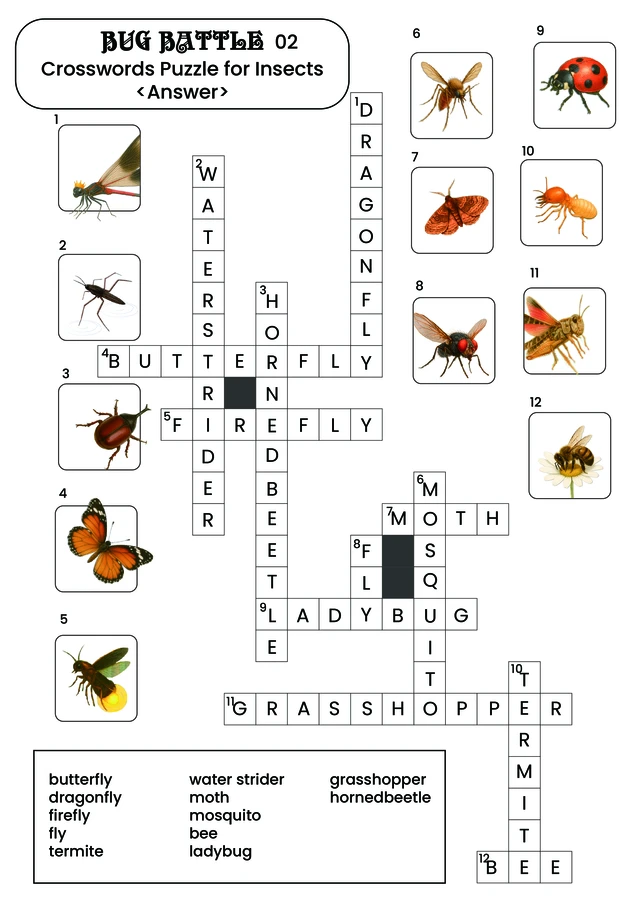
Ladybugs are special Draw cards. They must, however, be matched by color, species, number, or first/last letter to the card presently on top of the discard pile. If you play a red ladybug, the next player must draw one card. An orange ladybug will force them to draw two cards; a yellow ladybug—three cards. Of course, if the first player plays a red ladybug and the next player an orange one, then the third player will have to draw three cards…unless they have another ladybug (or a dragonfly, which will protect them from any penalties; OR a butterfly, water strider or grasshopper—which can deflect the penalties to another player!).
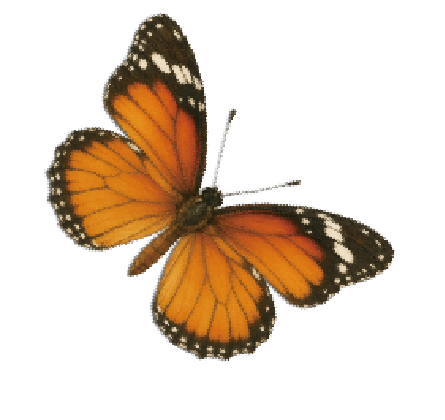
Butterflies reverse the order of play (clockwise to counterclockwise and vice versa). They must, however, be matched by color, species, number, or first/last letter to the card presently on top of the discard pile. Let’s say there is a firefly (number 6) or a termite (number 12) on top of the discard pile and it’s your turn. If you play a butterfly (3) and a yellow ladybug (2), you’ll reverse the order of play and force the preceding player to draw three cards. Nice move! (Of course, if they happen to have a butterfly, they can put it down and send all the penalties back to you!)
Water striders are also called Skippers. If you play a black water strider, the next player will lose a turn. A brown water strider will cause the next two players to skip a turn; a yellow striped one—three.
Grasshoppers are special Jump cards. By playing a grasshopper you can either forward or reverse to any player other than yourself. Shout “Jump!” when playing a Grasshopper, then decide who plays next!
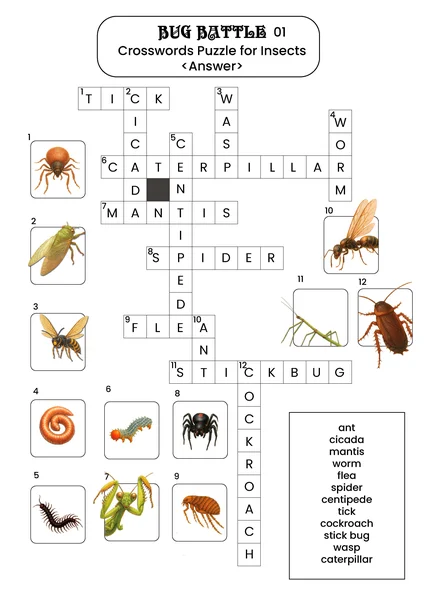
Mantises, spiders, wasps and centipedes hunt other insects and are Wild Cards. Play them anytime! Choose the next color to match. Shout “Bug Battle!” when playing a Wild Card.
Dragonflies are the King Cards of Bug Battle. Play them to skip any penalties and immediately play any other card. Shout “King Card!” when playing a Dragonfly. Since Dragonflies are so valuable, you probably shouldn’t play them until the very end—until you’re ready to finish.